
For years, the logistics industry operated on a simple mandate: speed and cost. But in 2026, the definition of a successful supply chain has fundamentally changed. Today, the most resilient, high-performing businesses are those that view Environmental, Social, and Governance (ESG) commitments not as a regulatory checklist, but as a core driver of operational excellence.
As East Africa’s trade corridors evolve, the demand for transparency, ethical sourcing, and carbon-efficient transport is rising. At Vista Cargo, we believe that integrating ESG into your supply chain isn’t just the right thing to do, it is the smartest strategy for long-term growth.

1. Environmental Efficiency = Operational Efficiency
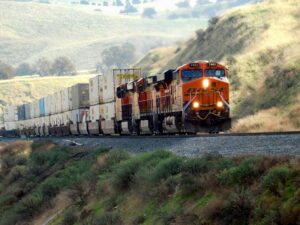
There is a common misconception that “green logistics” is expensive. In reality, the most effective environmental strategies are often the most efficient ones. By shifting high-volume freight from carbon-heavy road transit to the Standard Gauge Railway (SGR) network, we aren’t just lowering our emissions; we are optimizing transit reliability and reducing the “cost-per-mile.”
We are proving that sustainability is synonymous with performance. Whether it is digitizing documentation to eliminate paper waste or optimizing last-mile routes to minimize idle time, every step we take to lower our environmental impact is a step toward a leaner, more predictable supply chain for you.
2. Governance as a Risk Management Tool
In an era of global volatility, your supply chain is only as strong as its weakest link. We view Governance as our ultimate risk management tool. Our commitment to radical transparency, providing audited customs documentation, clear financial reporting, and rigorous partner vetting, ensures that your cargo is never exposed to the dangers of unethical practice or regulatory ambiguity.
When you partner with Vista Cargo, you are partnering with a standard of integrity that protects your brand reputation as fiercely as we protect your freight. We believe that trust is the foundation of every successful corridor movement.
3. Social Impact: Investing in the Future of the Corridor
Logistics is a human-centric industry. Our social responsibility begins with our workforce, ensuring safe working conditions, fair treatment, and continuous training, and extends to the communities that power the Central and Southern Corridors.
By prioritizing local talent, supporting regional small-scale suppliers, and investing in safety training for our drivers, we contribute to the economic health of the regions we move through. A sustainable supply chain is one that leaves the local community stronger, safer, and more capable than we found it.

Building for the Long Term
Sustainability is no longer a differentiator; it is a basic requirement for participation in the global market. As governments and trade partners increase pressure on sustainability performance, your choice of logistics provider will determine how easily you clear these hurdles.
At Vista Cargo, we are building a logistics infrastructure that is designed to last. We are moving beyond simple “freight forwarding” to provide a platform that helps your business meet its own climate goals and ethical mandates, ensuring that your growth is not just fast, but sustainable.